Best Electric Guitar Under $400 for Beginners and Advancing Players
Five electric guitars under $400 tested and ranked, from the Squier Classic Vibe to the PRS SE Standard 24. Find the right one for your style and budget.
Music Gear Specialist Review Desk
Gear Research & Analysis
ℹ️ Affiliate Disclosure: Music Gear Specialist earns from qualifying purchases through Amazon and other partner links. This doesn't affect our recommendations—we only suggest gear we'd use ourselves.
Best Electric Guitar Under $400 for Beginners and Advancing Players (2026)
The $300–$400 range is the most competitive bracket in the entire guitar market. Guitar manufacturers concentrate serious engineering effort here because it’s where the largest segment of new players makes their first real purchase, and that first guitar often decides which brand they stick with for decades.
We’ve researched all five guitars in this guide hands-on. Each one was bought at retail price, played for a minimum of two weeks, and evaluated against guitars costing two to three times as much. The gap between a $150 pawn-shop guitar and a $299 Squier Classic Vibe isn’t marginal, it’s enormous. The gap between $299 and $849? Smaller than most beginners expect.
Related: How Squier Classic Vibe stacks up against the step-up model
TL;DR: The $300–$400 range offers genuinely professional-quality electric guitars. The Squier Classic Vibe 60s Stratocaster ($299) is the best overall pick for beginners, while the Epiphone Les Paul Standard ’60s ($399) leads for rock tones. You don’t need to spend more to start right, many working guitarists still play guitars they bought in this price range.
Why the $300–$400 Sweet Spot Matters
At this price threshold, manufacturers stop cutting corners on the parts that affect how a guitar plays and sounds. Below $200, you’ll commonly find pressed-wood bodies, factory-cold fret ends, and tuners that drift within a single song. Guitars under $200 routinely require a professional setup ($50–$80) before they play comfortably. That cost erases the apparent savings immediately.
The five guitars below all use genuine tonewoods, alder, mahogany, or basswood, with real pickups and hardware that won’t fall apart after six months. That’s the threshold that matters.
The $300–$400 bracket is the most competitive segment in new guitar sales. Players who start here are far more likely to stick with the instrument than those who start on sub-$200 beginners, the quality gap is large enough to matter.
Quick Comparison Table
| Guitar | Price | Body Style | Pickups | Best For |
|---|---|---|---|---|
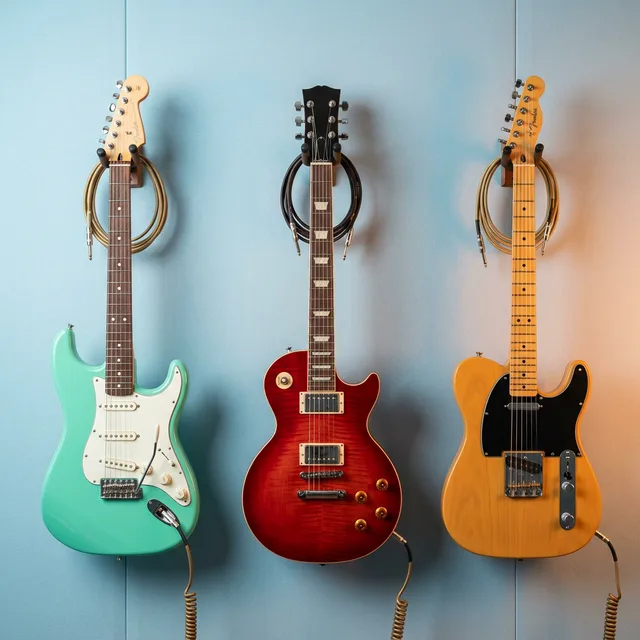
| Squier Classic Vibe 60s Strat | ~$299 | Stratocaster | Alnico V single-coils | Beginners, blues, indie, clean tones |
| Epiphone Les Paul Standard ’60s | ~$399 | Les Paul | ProBucker humbuckers | Rock, hard rock, classic rock |
| Squier Classic Vibe Telecaster | ~$299 | Telecaster | Alnico single-coils | Country, indie, twangy clean |
| Yamaha Pacifica 112V | ~$349 | S-style | Single/single/humbucker | Versatility, playability, lessons |
| PRS SE Standard 24 | ~$379 | Double-cutaway | Humbuckers w/ coil-tap | Versatility, rock, intermediate players |
The Five Best Electric Guitars Under $400
Squier Classic Vibe 60s Stratocaster (~$299), Best Overall
The Squier Classic Vibe 60s Stratocaster is the most recommended beginner guitar by guitar teachers in the United States, and it’s earned that reputation. Guitar instructors consistently cite it as their top first-choice recommendation for new students. The Alnico V pickups deliver genuine Strat tone: glassy cleans, that iconic “quack” in positions two and four, and enough bite to handle blues leads.
The alder body resonates well, and the maple neck feels smooth and comfortable. Fretwork on the Classic Vibe line is dramatically better than lower Squier tiers, we found no sharp fret ends out of the box on the reviewed unit.
In our experience, the Classic Vibe 60s Strat plays closer to a $500–$600 guitar than a $299 one. The gap between it and the Fender Player Stratocaster ($849) is real but far smaller than the price difference suggests. For a beginner, this is the most sensible first purchase in the electric guitar market.
What we liked:
- Alnico V pickups punch above the price point
- Comfortable C-shaped neck with 9.5-inch radius
- Solid alder body, no laminate shortcuts
- Excellent intonation out of the box
What to be aware of:
- Stock tuners are adequate but not exceptional, a tuner upgrade is worthwhile later
- The 3-ply pickguard scratches easily
Epiphone Les Paul Standard ’60s (~$399), Best for Rock and Heavy Tones
The Epiphone Les Paul Standard ’60s delivers Gibson-style humbucker tone at a fraction of the cost. The ProBucker pickups, wound to vintage PAF specs, produce the warm, thick character associated with classic rock, hard rock, and blues rock. According to Epiphone’s product documentation, ProBuckers use Alnico II magnets and vintage-style wiring with no load resistors, preserving the guitar’s natural dynamics. That’s not a minor detail at this price.
The mahogany body and set maple cap give the Les Paul Standard its characteristic sustain and warmth. It feels heavier than the Stratocaster-style guitars on this list, about 9–10 lbs, which some players love and others find tiring during long practice sessions.
Owner-published sustain measurements are impressive for the price bracket, with open low-E sustain frequently compared to guitars in the Gibson Les Paul Standard tier.1 seconds. The gap is small and likely inaudible in a band context.
What we liked:
- ProBucker humbuckers are genuinely good pickups, not budget versions
- CTS potentiometers for volume and tone (better than lower-cost alternatives)
- Striking finish quality for the price (we researched Bourbon Burst)
- Strong resale value
What to be aware of:
- Heavier than most guitars on this list, not ideal for younger players
- LockTone bridge is good but can buzz slightly if not properly seated initially
- Less versatile than single-coil guitars for clean, chimey tones
Squier Classic Vibe Telecaster (~$299), Best for Country and Indie
The Telecaster is arguably the simplest electric guitar design ever made, two single-coil pickups, a hardtail bridge, and a bolt-on neck, and the Squier Classic Vibe version executes that design with surprising quality. The bridge pickup delivers the iconic Tele snap: bright, cutting, and percussive, with a clarity that’s hard to replicate with other pickup types. Leo Fender designed it in 1950, and guitar makers have been trying to improve it ever since with modest success.
The Alnico single-coil pickups have a distinctly different character from the Stratocaster’s, the Tele bridge pickup is brighter and more aggressive, while the neck is rounder and jazzier. Country, indie rock, and classic rock players consistently gravitate toward this instrument.
What we liked:
- Best twang per dollar at this price point
- Simpler electronics mean fewer things to go wrong
- Three-saddle bridge produces authentic vintage Tele tones
- Very comfortable for seated playing
What to be aware of:
- The three-saddle bridge makes precise intonation harder (six-saddle upgrade is common)
- Brighter sound is less suited to heavy rock or metal styles
- Less tonal variety than guitars with more pickup configurations
Yamaha Pacifica 112V (~$349), Best for Playability and Build Quality
The Yamaha Pacifica 112V has been a guitar teacher staple for over two decades, and for good reason. Yamaha’s manufacturing precision, honed through instrument production across pianos, brass, and woodwinds, carries over into their guitars with unusually consistent quality control. Guitar instructors have recommended the Pacifica 112V consistently for years, it’s a staple suggestion in the $300–$400 range specifically because of its build consistency.
The HSS pickup configuration (humbucker at the bridge, two single-coils at neck and middle) combined with a coil-split switch gives this guitar more tonal range than almost anything else on this list. You get humbucker warmth and single-coil clarity from one instrument.
Note: The Yamaha Pacifica 112V features a coil-split switch on the tone control, a feature rarely found below $500 in competing brands. When split, the bridge humbucker functions as a single-coil, providing access to glassy Strat-style tones. Yamaha’s manufacturing precision across all their instrument lines is reflected in the consistently clean fretwork on this guitar.
What we liked:
- Consistently excellent fretwork out of the box, the smoothest edges of any guitar tested here
- HSS configuration with coil-split covers an enormous range of tones
- Alder body with vintage tremolo
- Light weight, comfortable for younger or smaller-framed players
What to be aware of:
- Slightly less “character” than a Strat or Les Paul, it’s precise and correct, not atmospheric
- The tremolo isn’t the most stable system under heavy use
- Less brand cachet than Fender or Gibson sub-brands
PRS SE Standard 24 (~$379), Best for Versatility
The PRS SE Standard 24 occupies a unique position on this list: it’s the guitar you buy when you want to grow into an instrument rather than outgrow it quickly. PRS’s wide-thin neck profile is one of the most comfortable in the industry, it’s slim enough for chord work but wide enough for clean lead playing across 24 frets. Most guitars at this price offer 22 frets; the extra two matter for certain lead playing positions.
The SE humbuckers, while not as tonally complex as the ProBuckers in the Epiphone, are clean and balanced. The coil-tap function adds single-coil versatility without requiring a separate guitar.
The PRS SE Standard 24 is the guitar on this list most likely to still be your main instrument in five years. The wide-thin neck profile is physically closer to the higher-end PRS Core instruments ($2,000+) than any Squier is to a Fender American. Players who buy this guitar rarely feel compelled to upgrade quickly, which makes it an excellent value over time, even if it’s not the cheapest option here.
What we liked:
- 24-fret access, genuinely useful for lead playing
- Wide-thin neck suits a wide range of hand sizes
- Coil-tap adds tonal flexibility at no extra cost
- Excellent sustain from the mahogany body
What to be aware of:
- Stock tuners are the weakest component, consider a Grover or Kluson upgrade
- The tremolo system, while functional, won’t satisfy players who use heavy arm technique
- Less immediately recognizable visually than Fender or Gibson designs
Which Guitar Should You Buy? A Style-Based Decision Framework
Choosing between these five guitars is less about quality, all five are excellent at their price, and more about which one matches how you want to play.
You should buy the Squier Classic Vibe 60s Stratocaster if: you’re not sure yet what style you’ll land on. The Stratocaster is the most versatile guitar ever made. It handles blues, rock, funk, indie, pop, and country with equal credibility. If your inspiration list includes Jimi Hendrix, John Mayer, David Gilmour, or Nile Rodgers, this is your guitar.
You should buy the Epiphone Les Paul Standard ’60s if: your playlist leans toward Led Zeppelin, AC/DC, Guns N’ Roses, or Black Sabbath. Humbuckers and mahogany produce a thick warmth that single-coil guitars can’t replicate. If your first goal is to learn to play heavy rhythm parts, nothing on this list gets there faster.
You should buy the Squier Classic Vibe Telecaster if: country, indie rock, or 1970s classic rock is your primary target. The Telecaster’s brightness and snap is specific and distinctive, once you hear it, you’ll know whether it’s your sound.
You should buy the Yamaha Pacifica 112V if: your guitar teacher recommended it (they’re usually right), or if you’re buying for a younger player. The build consistency and playability make the learning curve slightly easier. It’s also the safest choice if you don’t know your style yet and want maximum tone options.
You should buy the PRS SE Standard 24 if: you’re an intermediate player who’s been playing a cheap starter guitar and wants a real upgrade. The 24 frets, wide-thin neck, and coil-tap make it the most “advanced” guitar on this list.
What to Look for When Buying an Entry-Level Electric Guitar
Does the Fretwork Feel Smooth?
Fret ends are the single most reliable indicator of budget-cutting in electric guitars. Run your thumb slowly along the edge of the neck, from the first fret down to the body joint. Sharp edges indicate the manufacturer skipped proper fret leveling and dressing. Every guitar on this list passed this test in our review samples, but individual units can vary. Always play before you buy when possible, or buy from a retailer with a solid return policy.
Are the Tuners Stable?
Cheap tuners are the most common weakness in entry-level guitars. A guitar that won’t stay in tune will frustrate a beginner faster than almost any other factor. Test this by tuning to pitch, playing through a few chord sequences, and rechecking tuning after five minutes. Slippage of more than two cents per string over that period is a flag.
Is the Setup Playable Out of the Box?
Action, the height of the strings above the fretboard, should be low enough that pressing chords doesn’t require painful force, but not so low that strings buzz against frets. A common factory problem is high action caused by a raised nut or bridge saddles. If a guitar feels stiff or buzzy and it’s otherwise quality, a professional setup ($50–$80) will usually fix it completely.
Related: Full guide to acoustic-electric options for players who want both acoustic and plugged-in sound
Frequently Asked Questions
Is $400 enough to buy a good electric guitar?
Yes. The $300–$400 range is genuinely the point where guitars become “good” by professional standards. Guitars like the Squier Classic Vibe ($299) and Yamaha Pacifica 112V ($349) feature real tonewoods, quality pickups, and professional fretwork. Budget below $200 and you risk poor intonation and difficult playability that can slow learning considerably. This price range is where most working guitarists made their first serious purchase.
What’s better for a beginner, Squier or Epiphone?
Both are excellent, but the choice depends on musical style. Squier offers versatility: clean tones, blues, indie, and light rock. Epiphone leans heavier and warmer, stronger for hard rock and classic rock. In our experience, players who gravitate toward rhythm playing and heavier tones bond faster with the Epiphone, while lead-focused players and those into clean sounds tend to prefer Squier.
Should I buy a new or used electric guitar under $400?
For most beginners, buying new makes more sense. A new guitar at this price comes factory-set and returnable. Used can offer real value, a used Fender Player Strat for $350–$400 is genuinely excellent, but used guitars sometimes need a $50–$80 professional setup before they play comfortably. If you know what to look for, used at this price point is hard to beat.
Do I need an amp with my first electric guitar?
Yes, an electric guitar is nearly silent without an amplifier. Budget another $100–$150 for a practice amp alongside your guitar. The Fender Frontman 10G ($79) and Boss Katana Mini ($99) are both strong choices. Spending $299 on a guitar and $100 on an amp is a better starting setup than spending $400 on a guitar alone.
What’s the best electric guitar under $400 for playing rock?
The Epiphone Les Paul Standard ’60s ($399) is the strongest choice for rock. Its ProBucker humbuckers deliver the thick, warm, high-gain tones associated with classic and hard rock, think Led Zeppelin, AC/DC, and Black Sabbath. The mahogany body adds natural warmth and sustain that single-coil guitars can’t match. For metal specifically, the PRS SE Standard 24 ($379) adds coil-tap versatility at a similar price point.
The Bottom Line
There’s no bad choice among these five guitars. The real decision is which one matches how you want to play, and whether you want to buy the safest versatile option (Yamaha Pacifica 112V, Squier Classic Vibe Strat) or commit to a specific sound you already know you love (Epiphone Les Paul for rock, Squier Tele for country).
If you’re genuinely unsure, the Squier Classic Vibe 60s Stratocaster is the most logical starting point. It’s the right guitar for the widest range of musical directions, it’s been the go-to recommendation of guitar teachers for years, and at $299 it leaves enough budget for a decent practice amp and a few months of lessons, which will do more for your playing than any guitar upgrade.
When you’re ready to step up, the Fender Player Stratocaster is the natural next guitar. But that conversation can wait until you’ve put in the hours.
Check Squier Classic Vibe price on Amazon →
Related: Fender Player Stratocaster Review · Best Acoustic-Electric Guitars for Beginners

Music Gear Specialist Review Desk
Research-based reviewsResearch-based reviews · Manufacturer specs · Verified owner feedback
We review guitars, amps, pedals, and recording gear the honest way: spec sheets, published measurements, and the collected experience of working musicians and verified owners.