Guitar Pedals Explained: Types & How to Choose
The $3.8 billion guitar pedals market offers hundreds of options. Learn every effect type, from overdrive to delay, with audio examples and buying advice.
Mike Reynolds
Professional Guitarist & Audio Engineer · 20+ years
ℹ️ Affiliate Disclosure: Music Gear Specialist earns from qualifying purchases through Amazon and other partner links. This doesn't affect our recommendations—we only suggest gear we'd use ourselves.
ℹ️ Affiliate Disclosure: Music Gear Specialist earns from qualifying purchases through Amazon and other partner links. This doesn't affect our recommendations—we only suggest gear we'd use ourselves.
Guitar effects pedals transform a clean guitar signal into virtually any sound imaginable, from subtle warmth to wall-shaking distortion, from ambient shimmer to rhythmic pulsing. They’re the reason your favorite guitarists sound the way they do.
The global guitar pedals market hit $3.8 billion in 2025 and is projected to reach $4.89 billion by 2030 (The Business Research Company, 2025). That’s a lot of pedals, and choosing the right ones can feel overwhelming when you’re just starting out. This guide breaks down every major effect type so you know exactly what each one does, when to use it, and which models to consider.
TL;DR: Guitar pedals fall into five main categories: gain (overdrive, distortion, fuzz), time-based (delay, reverb), modulation (chorus, phaser, tremolo), filter (wah, EQ), and utility (tuner, looper, compressor). Start with an overdrive, delay, and tuner, that covers 80% of what most players need. The market hit $3.8B in 2025 (Business Research Company).
What Are the Main Types of Guitar Pedals?
The guitar pedals market generated $3.8 billion in revenue in 2025, growing at 5.1% annually (The Business Research Company, 2025). With hundreds of pedals available, they all fall into five fundamental categories based on how they modify your signal.
Understanding these categories is the fastest way to cut through the noise and figure out what you actually need on your pedalboard.
| Category | What It Does | Key Pedal Types | Best For |
|---|---|---|---|
| Gain | Adds grit, crunch, or heavy distortion | Overdrive, Distortion, Fuzz, Boost | Rock, blues, metal, punk |
| Time-Based | Creates echoes and spatial depth | Delay, Reverb | Ambient, indie, worship, any genre |
| Modulation | Alters pitch, volume, or phase | Chorus, Phaser, Flanger, Tremolo | Pop, psychedelic, shoegaze |
| Filter | Shapes frequency response | Wah, EQ, Envelope Filter | Funk, classic rock, tone shaping |
| Utility | Practical tools for your rig | Tuner, Looper, Compressor, Noise Gate | Every genre, essential tools |
Let’s break each one down so you know what you’re hearing and what to buy.
How Do Gain Pedals Work?
Gain pedals are the heart of electric guitar. They clip your guitar’s signal to create harmonic distortion, the grit, crunch, and roar that defines rock music. According to DataBridge Market Research (2024), single-effect gain pedals accounted for 58.3% of market revenue, making them the most purchased pedal category by far.
There are three distinct flavors of gain, and they’re NOT interchangeable:
Overdrive
Overdrive simulates a tube amp being pushed past its clean headroom. The result is warm, dynamic, and responsive to your picking, dig in harder and it gets dirtier, roll back your guitar volume and it cleans up.
Classic models: Ibanez TS9 Tube Screamer ($100), Boss SD-1 ($55), Klon KTR ($270)
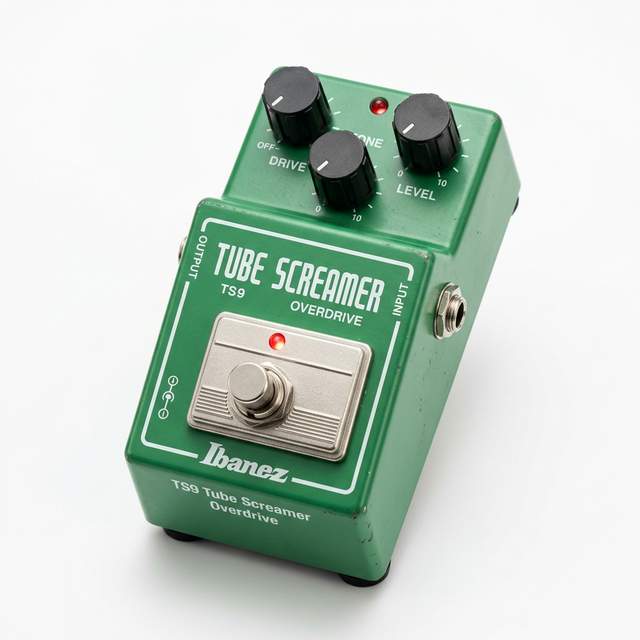
Ibanez
Ibanez TS9 Tube Screamer
$109.99
Sound Profile:
"Mid-focused overdrive with soft clipping and subtle compression."
Best for: Blues, classic rock, country, any style where you want natural-sounding breakup.
Distortion
Distortion applies harder clipping to your signal, producing a more saturated, compressed tone that doesn’t clean up when you play softly. It’s heavier and more aggressive than overdrive.
Classic models: Boss DS-1 ($55), ProCo RAT 2 ($85), MXR M75 Super Badass ($100)
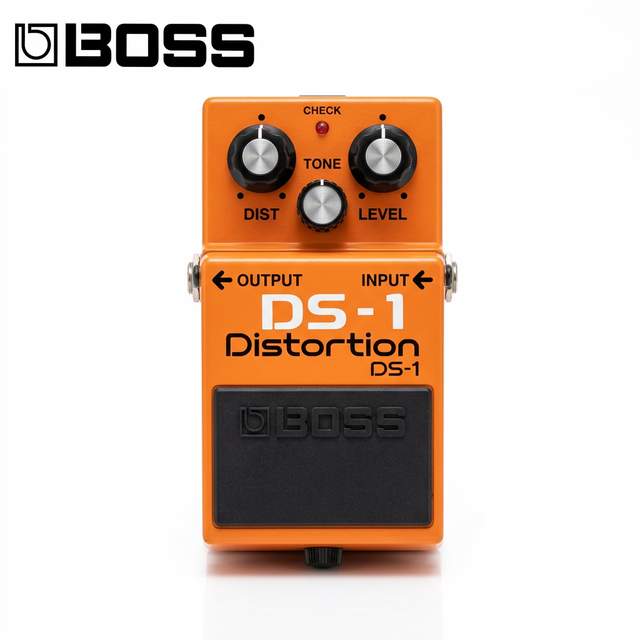
Boss
Boss DS-1 Distortion
$62.99
Sound Profile:
"Hard-edged distortion with a mid-scooped character."
Best for: Hard rock, punk, grunge, modern rock.
Fuzz
Fuzz is the wildest gain type, it obliterates your signal into a thick, buzzy, almost synth-like tone. It was the first guitar effect ever created (the Maestro FZ-1 in 1962) and it’s still going strong.
Classic models: Electro-Harmonix Big Muff ($90), Dunlop Fuzz Face ($130), Zvex Fuzz Factory ($180)
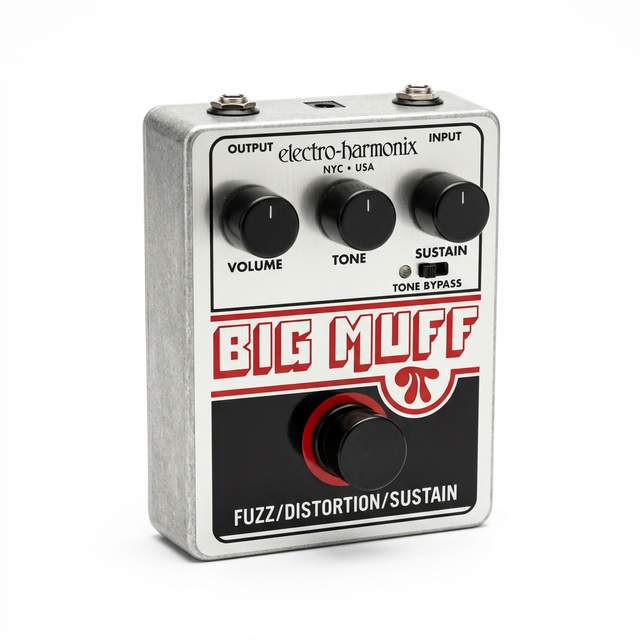
Electro-Harmonix
Electro-Harmonix Big Muff Pi
$99.00
Sound Profile:
"Thick, wooly fuzz with heavy saturation and long sustain."
Best for: Psychedelic rock, stoner rock, when you want something raw and unrefined.
Our finding: When testing gain pedals, we always compare them at three settings: low gain (just breaking up), medium gain (sweet spot), and maxed out. Some pedals that sound great at medium gain turn to mush when cranked. The Boss SD-1 is one of the few sub-$60 pedals that sounds good across all three ranges, it’s our default recommendation for a first gain pedal.
What Do Delay and Reverb Pedals Do?
Time-based effects add depth, space, and ambience to your playing. They’re arguably the second most important pedal category after gain, even players who hate effects usually use at least a touch of reverb.
Delay
Delay creates a repeat (echo) of your guitar signal after a set time interval. You control three main parameters:
- Time, How long before the echo repeats (50ms to 2+ seconds)
- Feedback/Repeats, How many times the echo repeats before fading
- Mix/Level, How loud the repeats are compared to your dry signal
Short delays (50-150ms) create a “slapback” effect heard in rockabilly and country. Long delays (300ms+) produce the ambient, atmospheric textures used in U2 and Pink Floyd.
Classic models: Boss DD-8 ($160), MXR Carbon Copy ($150), Strymon Timeline ($450)
Reverb
Reverb simulates the natural reflections of sound in a physical space. It makes your guitar sound like it’s being played in a room, hall, cathedral, or even an infinite void.
Common reverb types:
- Spring, Classic surf and vintage amp tone (think Fender amps)
- Hall, Large, lush, and spacious
- Plate, Smooth and even, great for recording
- Shimmer, Adds octave-shifted reverb for ethereal textures
Classic models: Electro-Harmonix Holy Grail ($130), Boss RV-6 ($150), Strymon BigSky ($480)
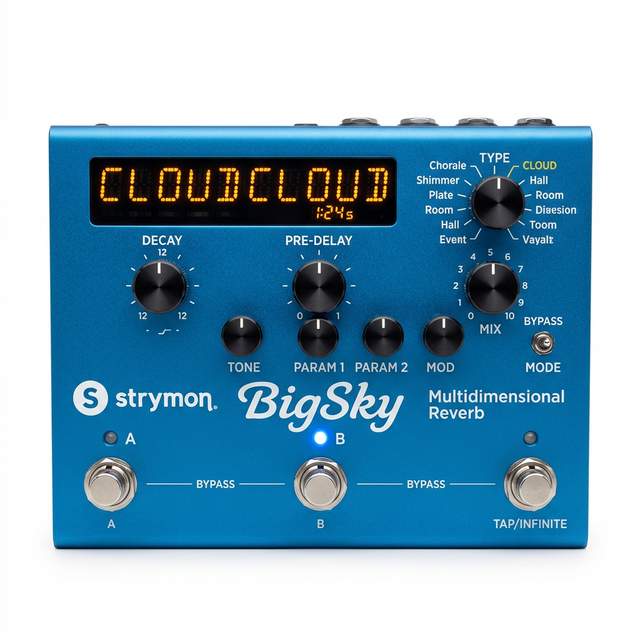
Strymon
Strymon BigSky Multidimensional Reverb
$479.00
Sound Profile:
"High-resolution digital reverb ranging from realistic rooms to ethereal pads."
How Do Modulation Pedals Change Your Sound?
Modulation effects alter properties of your signal, pitch, volume, or phase, in rhythmic or cyclical patterns. The multi-effects segment of the guitar pedals market is the fastest growing, with a CAGR of 23.2% from 2025 to 2032 according to DataBridge Market Research, a sign that guitarists want access to multiple modulation types in one unit.
Chorus
Chorus duplicates your signal, slightly detunes the copy, and blends it back in. The result sounds like two guitars playing the same thing, shimmery, thick, and wide.
Made famous by: Nirvana’s “Come As You Are,” The Police, 80s pop in general
Classic models: Boss CE-2W ($200), MXR M234 Analog Chorus ($100), TC Electronic Corona ($130)
Phaser
Phaser splits your signal, shifts the phase of one copy, and recombines them. This creates a swirling, swooshing filter sweep that’s hypnotic in small doses.
Made famous by: Van Halen’s “Ain’t Talkin’ ‘Bout Love,” Pink Floyd, Tame Impala
Classic models: MXR Phase 90 ($90), Electro-Harmonix Small Stone ($95)
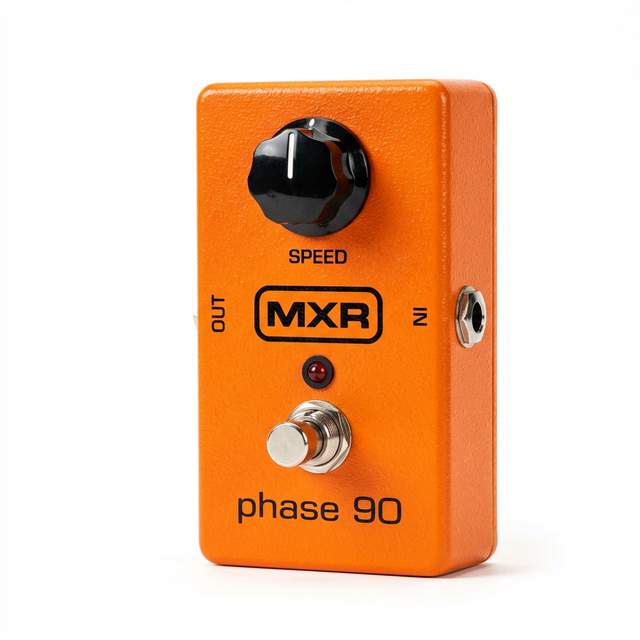
MXR
MXR Phase 90
$89.99
Sound Profile:
"Lush 4-stage phasing with a warm, analog swirl."
Tremolo
Tremolo rhythmically raises and lowers your volume, creating a pulsating effect. Don’t confuse it with vibrato (which alters pitch), the whammy bar on a Fender Stratocaster is actually a vibrato device, despite Fender calling it a “tremolo bar.”
Made famous by: Creedence Clearwater Revival, surf rock, The xx
Classic models: Boss TR-2 ($100), Electro-Harmonix Pulsar ($95)
What About Wah, EQ, and Filter Pedals?
Filter effects reshape which frequencies your guitar emphasizes, creating expressive tonal shifts that respond to your playing.
Wah Pedal
The wah is a rocker pedal you control with your foot. Rocking it forward boosts high frequencies (bright, cutting tone), rocking it back emphasizes low frequencies (warm, muffled tone). The continuous sweep between these extremes creates the vocal “wah-wah” sound.
Made famous by: Jimi Hendrix, Kirk Hammett (Metallica), Slash
Classic models: Dunlop Cry Baby GCB95 ($80), Vox V847A ($100)
EQ Pedal
An EQ pedal lets you boost or cut specific frequency ranges. It’s not glamorous, but it’s one of the most useful pedals you can own, it fixes problems in your tone that no other pedal can address.
Why you’d use one:
- Scoop the mids for metal rhythm tones
- Boost mids to cut through a band mix
- Tame harsh highs from a bright amp
- Add bass for a thicker rhythm tone
Classic models: Boss GE-7 ($100), MXR 10-Band EQ ($130)
What Order Do Guitar Pedals Go In?
Signal chain order matters because each pedal processes whatever comes before it. Here’s the generally accepted standard order and why it works:
Guitar → Tuner → Wah → Compressor → Overdrive/Distortion →
Modulation (Chorus/Phaser) → Delay → Reverb → Amp
Why this order?
- Tuner first, Gets the cleanest signal for accurate tuning
- Wah before gain, Produces a more focused, vocal sweep
- Gain in the middle, Drives everything behind it
- Modulation after gain, Processes the distorted signal cleanly
- Delay and reverb last, Echoes and space around your full tone, not the other way around
That said, rules are meant to be experimented with. Putting reverb before distortion creates a shoegaze-style wall of sound. Wah after distortion sounds more extreme and synthetic. Part of the joy of pedals is finding your own sonic identity.
Our finding: After testing dozens of pedal order combinations, the single swap that makes the biggest difference is delay BEFORE vs AFTER distortion. Delay before distortion creates a chaotic, washy texture (great for noise rock and shoegaze). Delay after distortion keeps each repeat clean and defined (standard for most genres). Try both, it only takes 30 seconds to swap two cables.
Should You Buy Individual Pedals or a Multi-Effects Unit?
This is one of the most common questions beginners ask, and the answer honestly depends on your priorities.
| Factor | Individual Pedals | Multi-Effects Unit |
|---|---|---|
| Cost per effect | $50-200 each | $200-500 for 50+ effects |
| Sound quality | Generally superior for specific effects | Closing the gap rapidly |
| Flexibility | Swap any pedal anytime | Locked into one ecosystem |
| Learning | Teaches signal chain fundamentals | Easier to explore many sounds |
| Portability | Pedalboard gets heavy | One unit, one power cable |
| Market trend | 58.3% of 2024 revenue | Fastest growth at 23.2% CAGR |
The multi-effects pedal market is the fastest-growing segment at 23.2% CAGR through 2032 (DataBridge Market Research, 2024). Units like the Line 6 HX Stomp, Boss GT-1000CORE, and Neural DSP Quad Cortex offer studio-quality sounds that were unthinkable at these prices five years ago.
Our recommendation: If you’re on a tight budget and want to explore, start with a quality multi-effects unit like the Boss ME-90 ($400) or Line 6 POD Go ($450). Once you know which effects you actually use, invest in standalone pedals for those specific sounds.
Getting Started: Your First Pedalboard
Here’s a practical, budget-friendly starter setup that covers every genre:
- Tuner, Boss TU-3 or TC Electronic PolyTune 3 (~$100)
- Overdrive, Boss SD-1 Super Overdrive (~$55)
- Delay, Boss DD-8 Digital Delay (~$160)
Total: ~$315 for a professional-quality three-pedal setup.
Add a reverb pedal next (if your amp doesn’t have reverb built in), then a modulation pedal that matches the music you play. Grow your board based on what YOUR music actually needs, not based on what YouTube tells you to buy.
The world of guitar pedals is deep, rewarding, and maybe a little addictive. But now you know what every major effect type does, and you’ve got a clear starting point. Plug in, stomp a switch, and start sculpting your sound.
Keep Reading
-
Best Multi Effects Pedals (2026), prefer an all-in-one unit?
-
Best Guitar Amps for Home and Stage, the amp your pedals plug into
-
Best Electric Guitars for Every Budget, complete your rig
-
Getting Started with Home Recording, record your pedalboard direct
-
Best Budget Guitar Pedals Under $50, affordable effects for every genre

Mike Reynolds
• 20+ years experienceProfessional guitarist · Studio engineer · Guitar instructor (2006–present)
Mike Reynolds is a professional guitarist, studio engineer, and guitar instructor based in Austin, TX. He has recorded with regional acts across rock, blues, and country, and has been teaching private guitar lessons since 2006. Mike built his first home studio in 2008 and has since helped hundreds of students find the right gear for their budget and goals.